Insights on CBC implementation, curriculum-native infrastructure, and the future of education in Kenya.
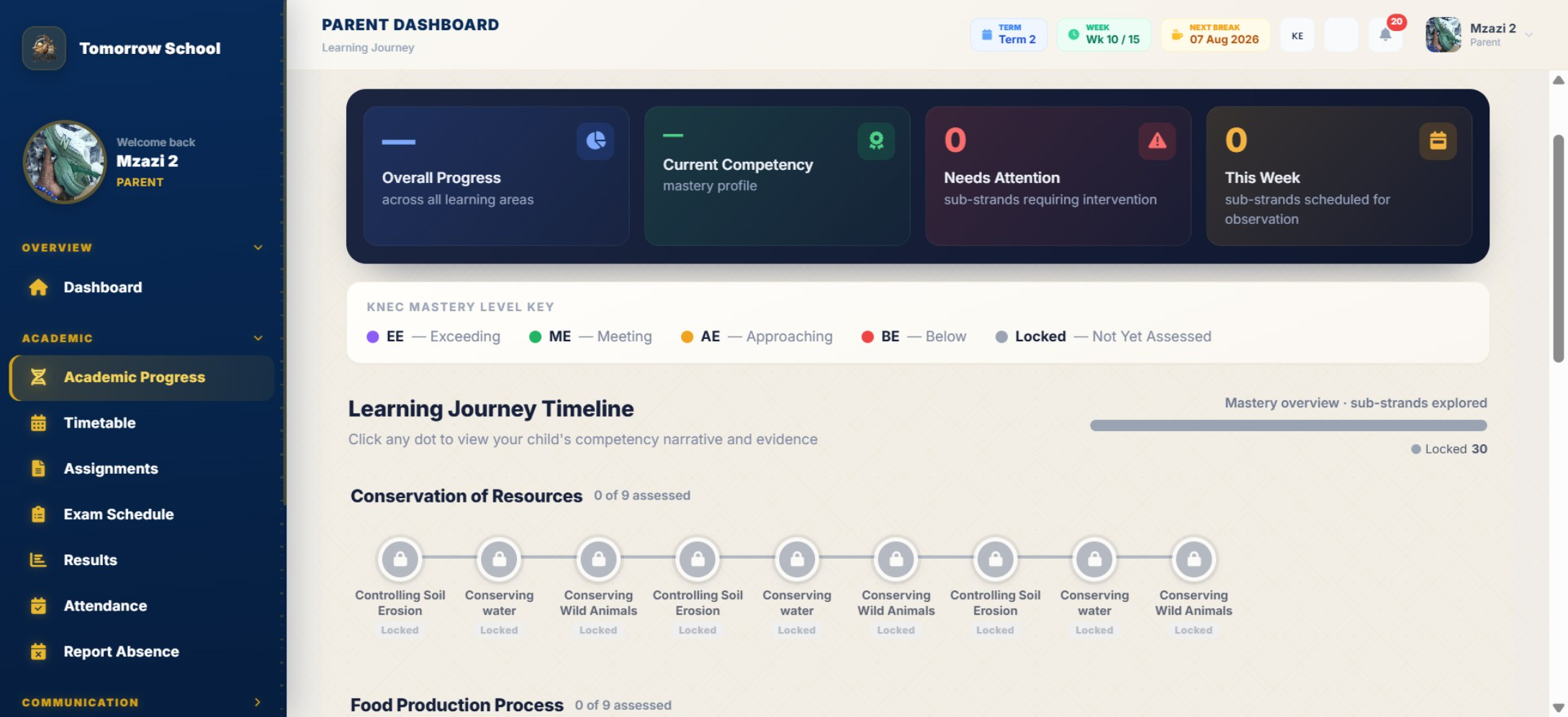
Kenya's CBC assessment framework has three layers and four tiers — each with different KNEC weighting ratios, grading scales, and evidence requirements. ROAN encodes all of it as structural data in the curriculum graph so every assessment is correct by construction.
Kenya's school terms run 13, 14, and 9 weeks — not equal thirds. This asymmetry broke every spreadsheet approach to curriculum planning and led ROAN to build its own internal teaching-week model, treating lesson distribution as a computed engine output rather than a manually entered value.
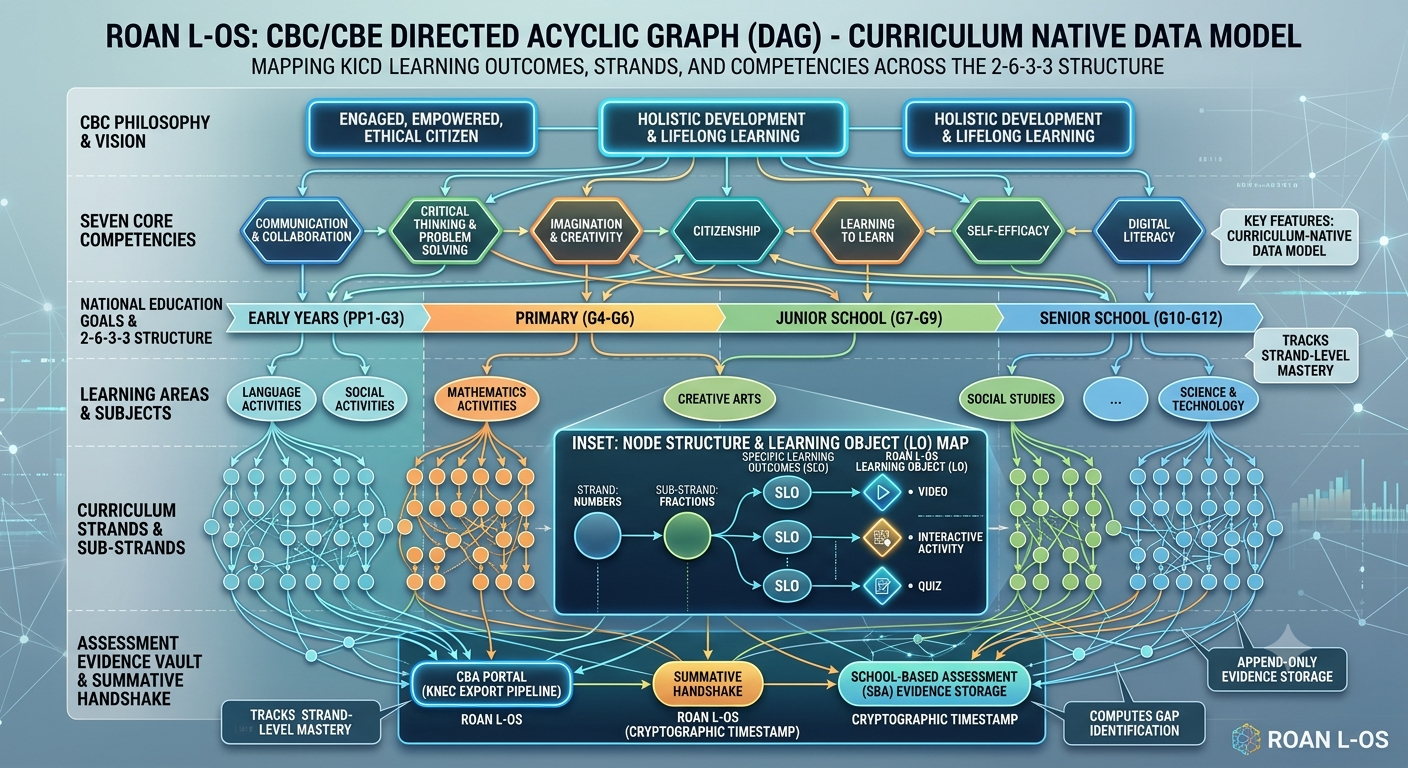
Kenya's KICD publishes the national curriculum as 2,000+ pages of PDFs. ROAN converts them into a directed acyclic graph — every learning outcome, strand, and sub-strand becomes a node with weighted edges. This post explains why a graph, not a table, and how the dual-schema architecture works.
Most EdTech layers content onto a generic platform and maps it to a curriculum after the fact. ROAN does the inverse — the curriculum is the data model. This is the difference between building a house on foundations and bolting walls onto a tent.
Africa has LMS and SMS platforms — but no Learning Operating System. We define the category, expose the gap in academic literature, and explain why Kenya's CBC demands infrastructure no existing tool provides.
No peer-reviewed research defines Learning Operating Systems. We trace the history from PLATO to LMS to curriculum-native infrastructure — and why we're building one for Africa.
Follow ROAN's journey as we build Kenya's first curriculum-native learning operating system. Reach out to collaborate.