
Learning Operating System
19 Oct 2026
ROAN L-OS is purpose-built for the Competency-Based Curriculum — not adapted onto a generic platform. It maps every KICD learning outcome from PP1 through Grade 12, tracks strand-level mastery, and connects schools, teachers, parents and publishers in one sovereign system.
Trusted By


Every capability is structurally anchored to the CBC. The curriculum isn't content layered onto a generic tool — it's the data model itself.
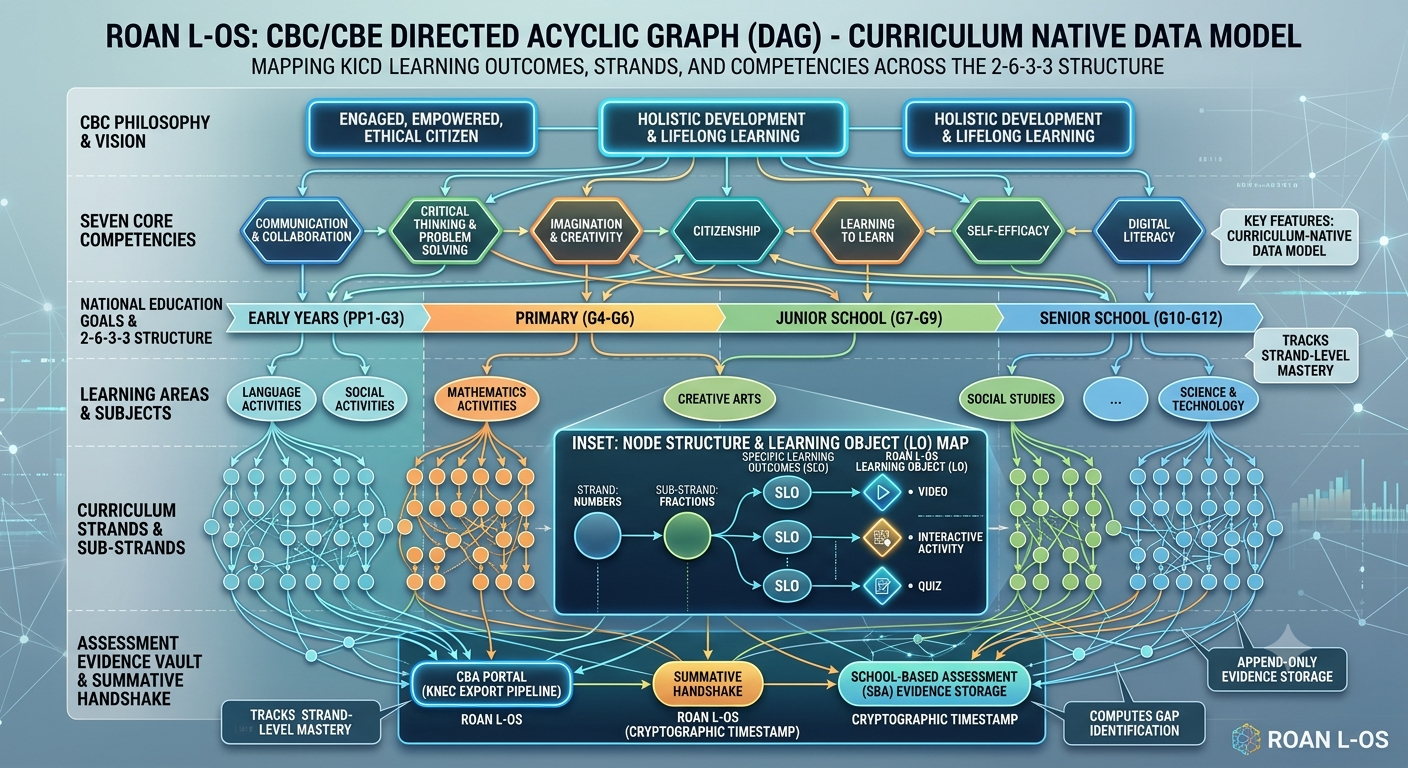
A directed acyclic graph mapping every KICD learning outcome across the 2-6-3-3 structure. Proportional term distribution, strand-level mastery tracking, and gap identification — all computed, never manually entered.
Cryptographically timestamped school-based assessment vault. Append-only evidence storage, tier-aware ratio engine for SBA/summative weighting, and a KNEC CBA portal export pipeline. Patent pending.
Full CBC assessment architecture — from EYE formative observation through Senior Secondary 8-level grading. Continuous assessment tools aligned to KNEC standards at every tier: PP1–Gr3, Gr4–6, Gr7–9, and Gr10–12.
The isSSS flag reconfigures 14 interface components for Senior Secondary context. Pathway-aware subject validation against 571 valid combinations across 3 pathways and 7 tracks — ARTS & SPORTS, SOCIAL SCIENCES, and STEM.
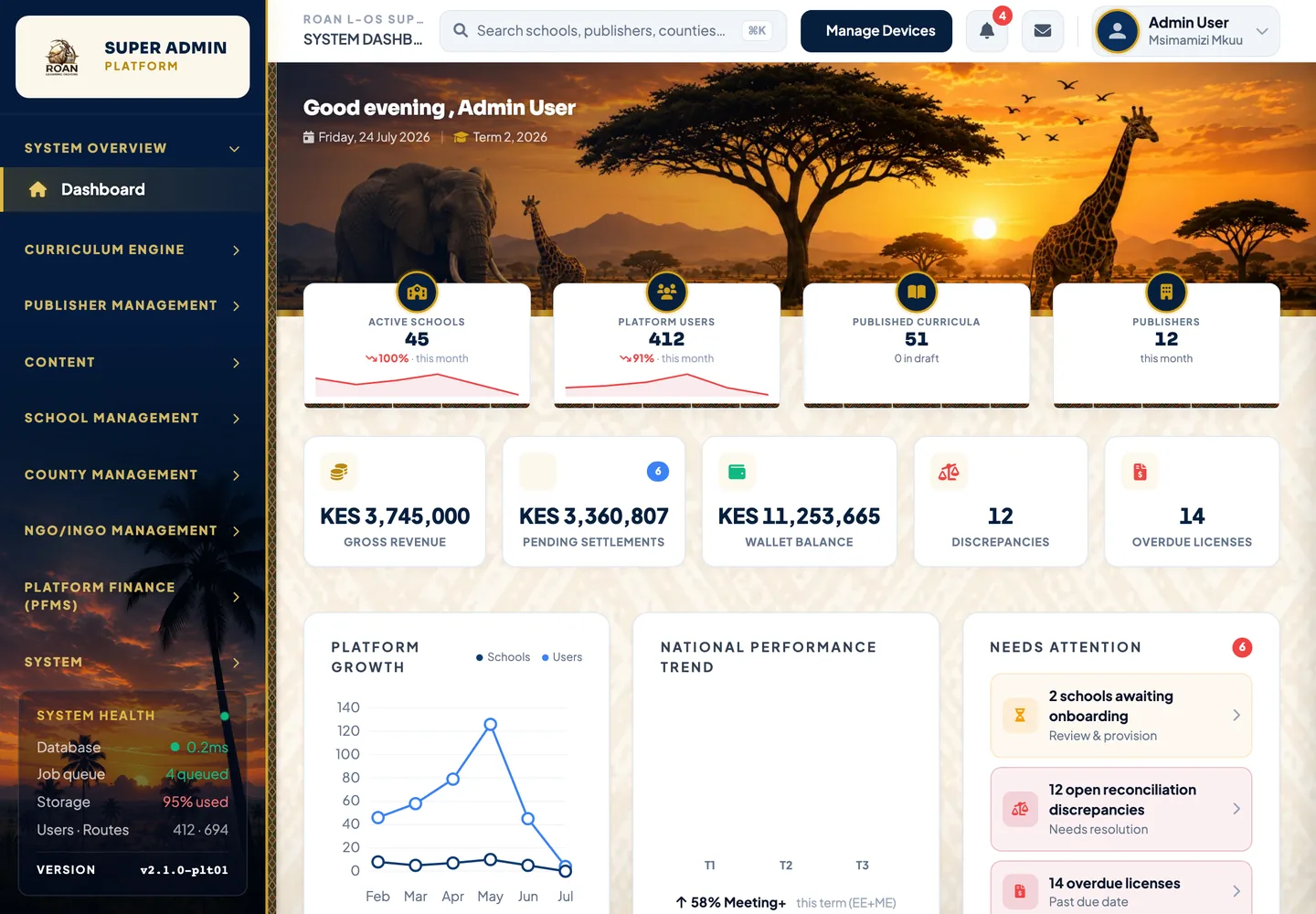
Admissions, attendance, timetabling, academic calendar management, TPAD/TSC integration, PFMS-grade financial management — all in a single system per school.
CBC-aligned content marketplace with per-school licensing, usage analytics, and a fair share revenue split in the publisher's favour.
Konza National Data Centre
Kenya Data Protection Compliant
KIPI — 2 Patents already filled with KIPI on the system
Built for CBC using KICD curriculum designs
Every AI function is locked to the Curriculum Graph Engine. No generic chatbot. No personal learner data reaches the API — only curriculum structure and anonymised mastery state.
Maps incoming learners onto the curriculum graph, seeding the Gap-Only Content Guardrail from day one.
AI content generation locked to identified learning gaps only. Prevents generation for already-covered outcomes.
Auto-generates formative assessments aligned to specific strands and sub-strands within the CGE.
CBC-aligned lesson planning support, constrained to the teacher's assigned subjects and curriculum week.
Identifies mastery patterns, flags at-risk learners, and recommends targeted interventions based on strand progress.
Helps publishers create and validate CBC-aligned digital content for the marketplace.
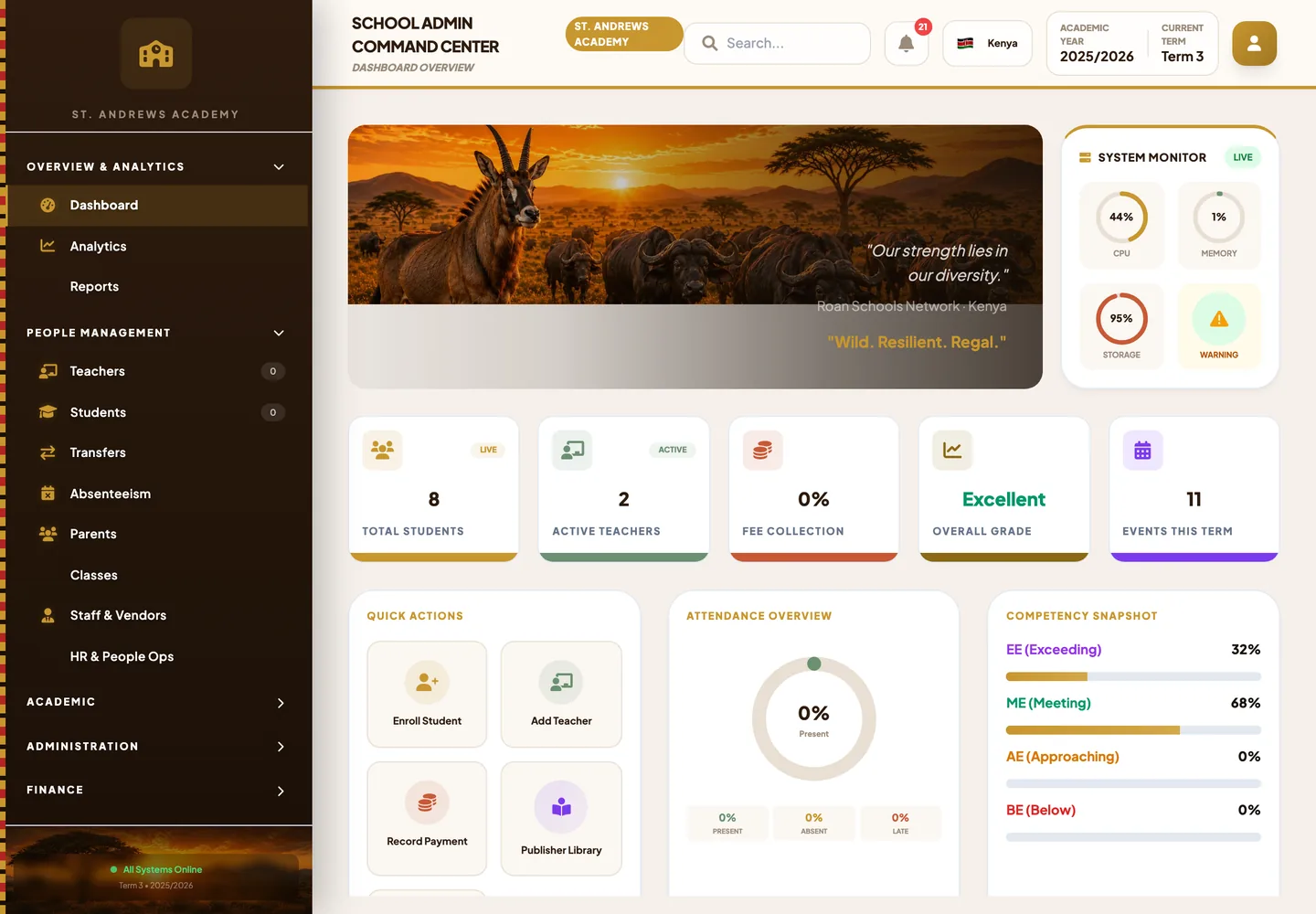
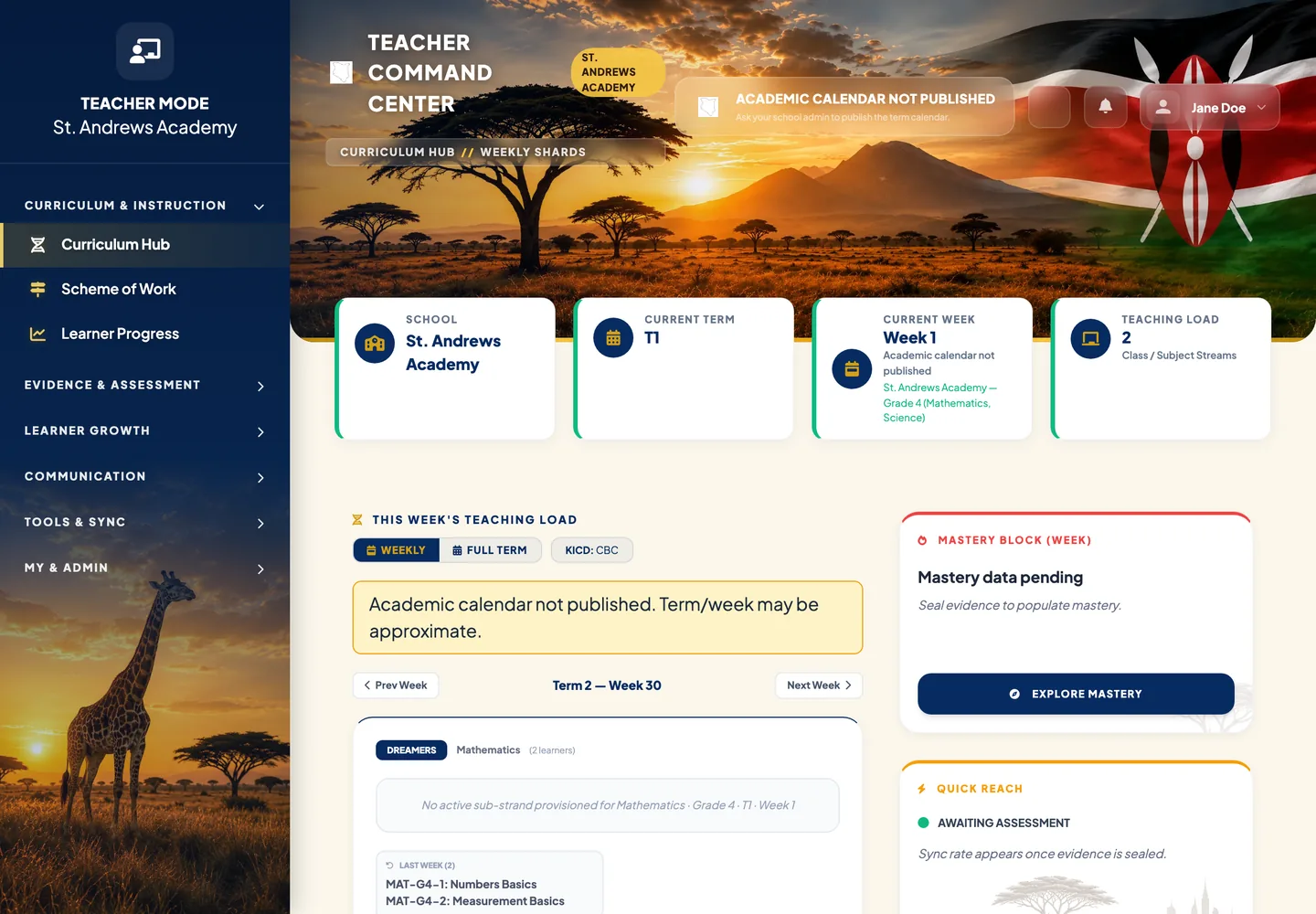
Each portal is purpose-built for its user — not a filtered view of one generic dashboard.
Admissions, class management, academic calendar, timetable generation, transport, inventory, document management, and fee collection.
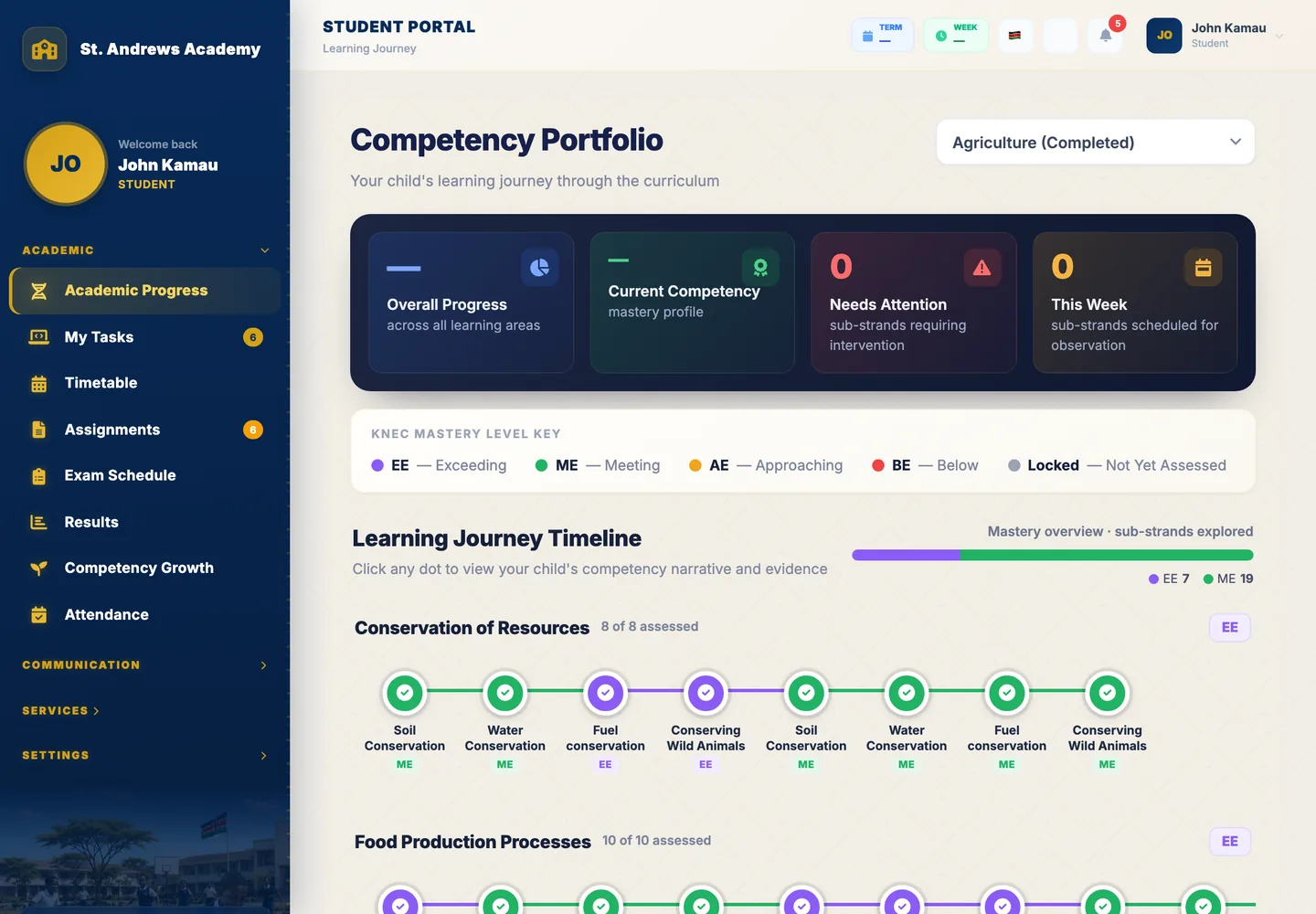
CBC lesson planning, continuous assessment, mastery tracking, TPAD self-appraisal, and automated report generation.
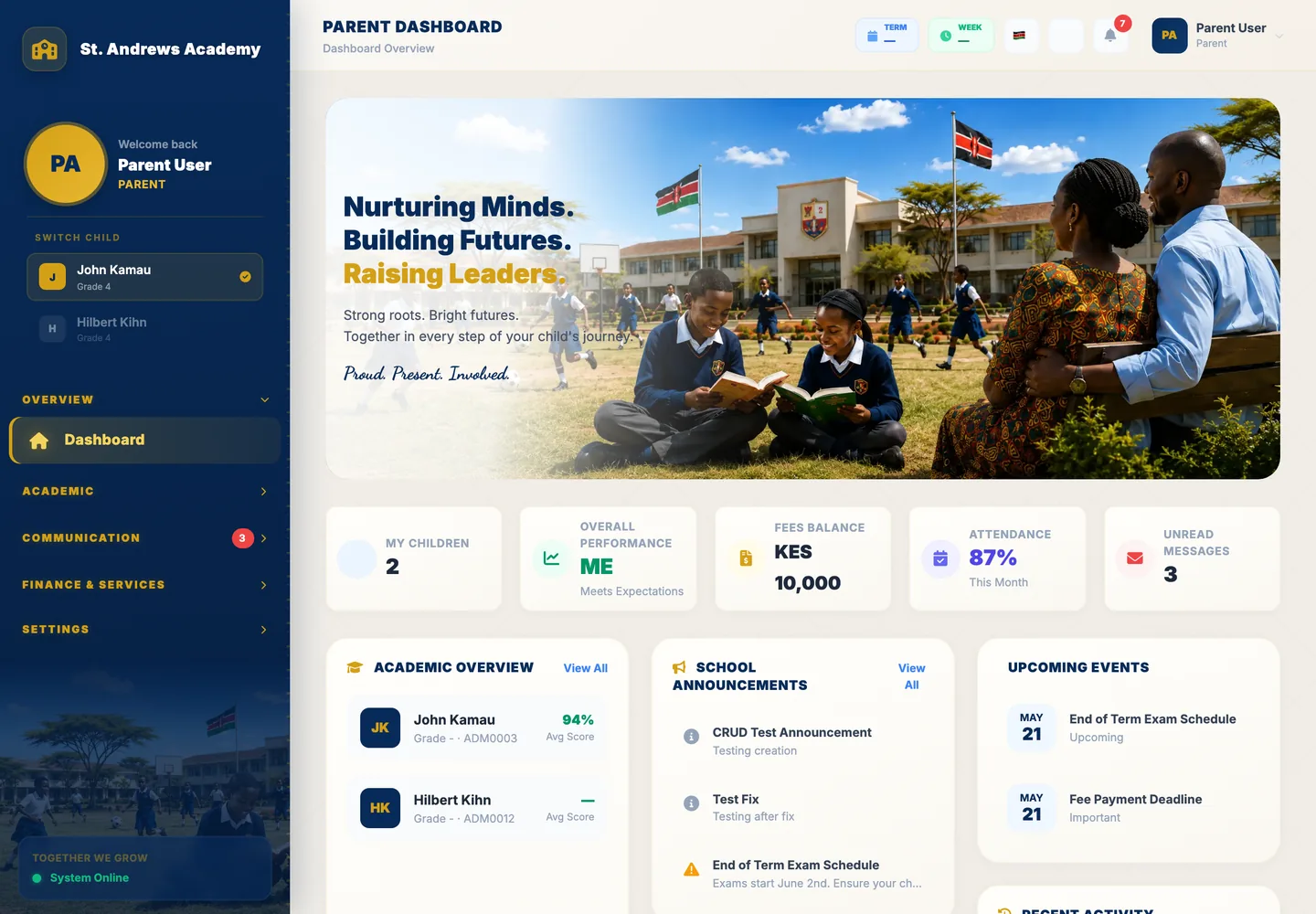
Sub-strand mastery spine graph, fee statements payment choices, remedial content access, bus tracking, and direct teacher messaging. Zero-contact student architecture.
Content upload, CBC alignment validation, licensing analytics, engagement metrics, and automated settlement reporting.
Sub-county performance analytics, school-level visibility, enrollment and attendance aggregation.
Programme-level dashboards for education partners and development organisations.
Read-only institutional dashboards — curriculum implementation visibility and assessment data access without platform control.
Video walkthroughs and downloadable documents.
A walkthrough of ROAN L-OS — architecture, portals, and CBC integration.
Lesson planning, continuous assessment, mastery tracking, and TPAD workflows.
Sub-strand helix, fee payments, remedial content, and the zero-contact architecture.
Curriculum insights, platform updates, and perspectives on Kenya's education transformation.
Request a demo and see how a curriculum-native operating system transforms schools, teachers, parents and publishers — in one sovereign platform.